1. Combined Upper‑Lower Vibration System, Complete Hollow Cavities & Low Defect Loss
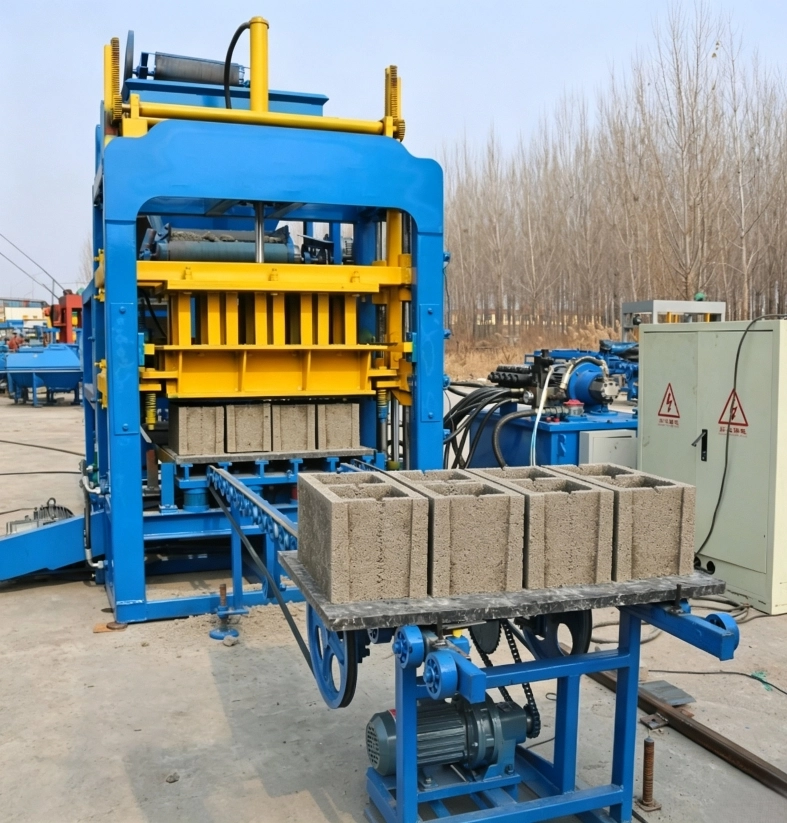
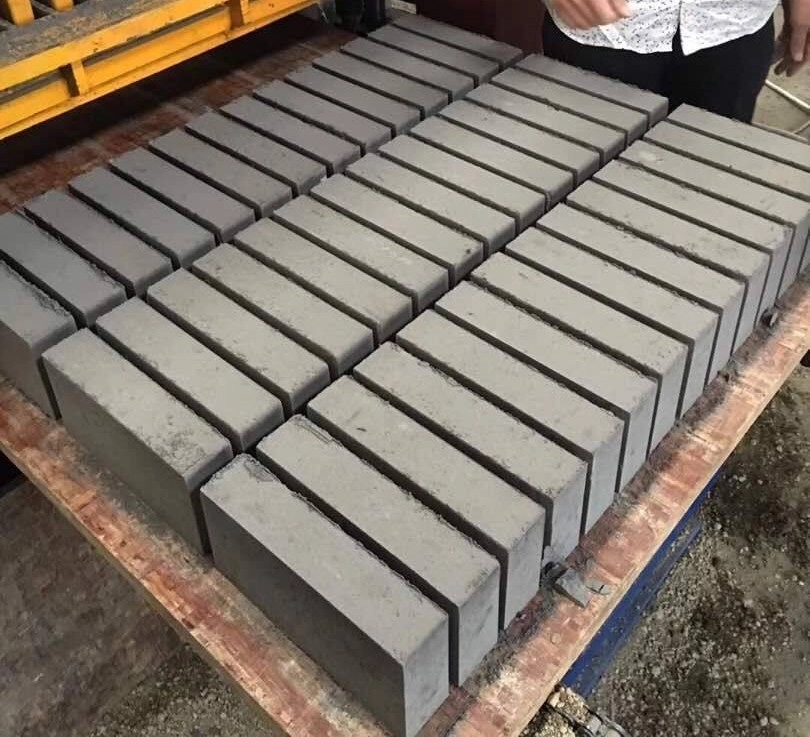
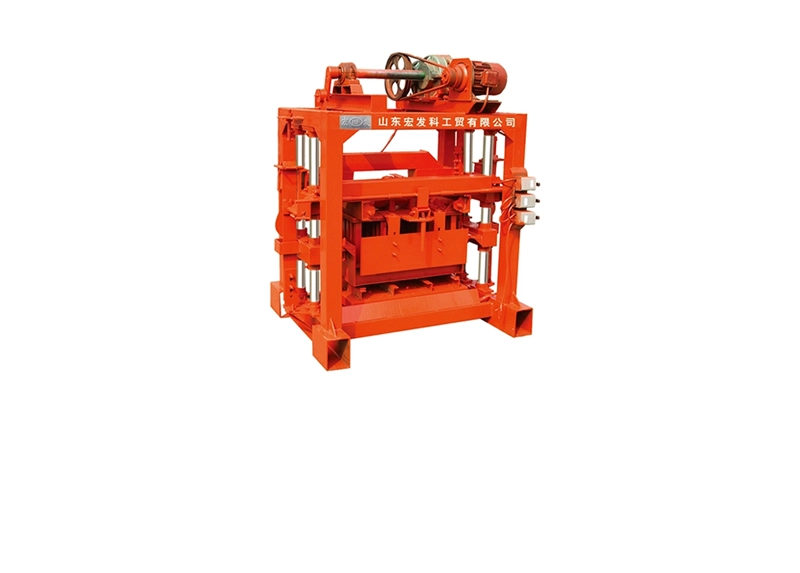
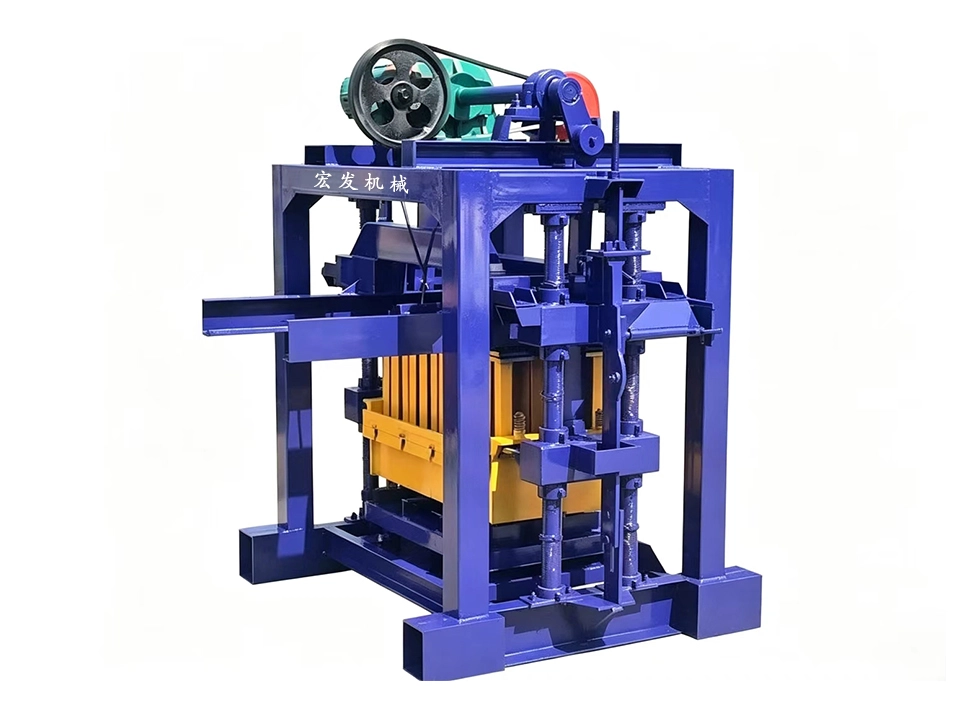
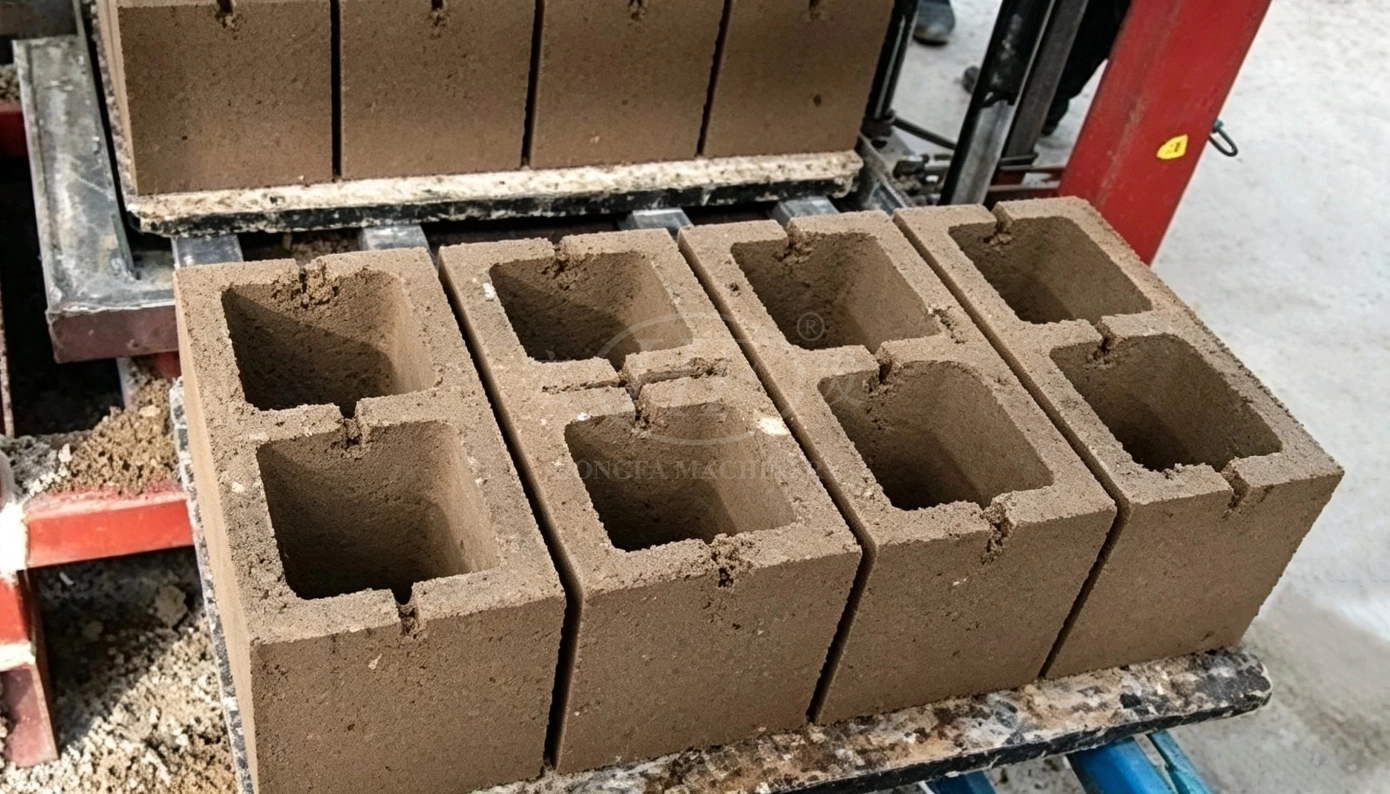
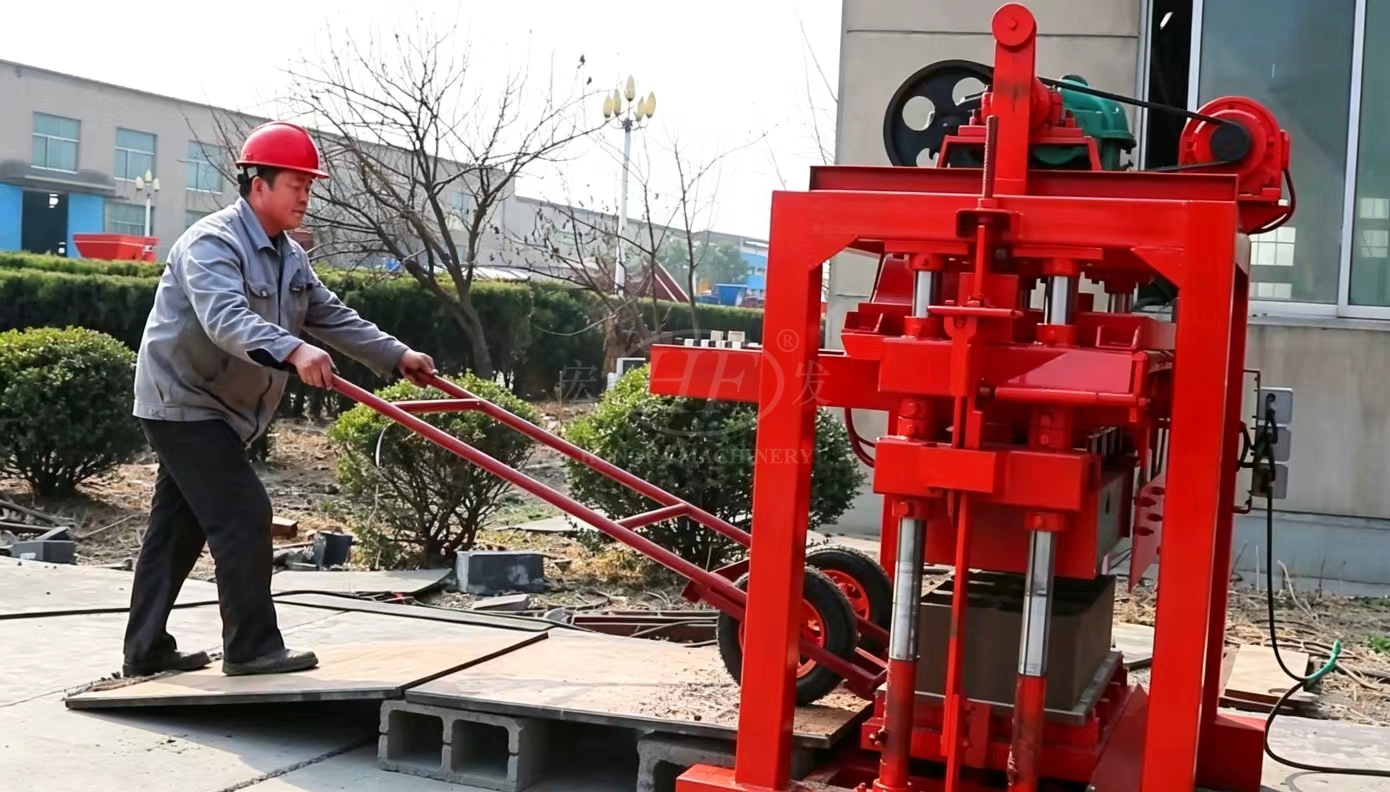
QTJ4‑40B2 is equipped with dual 3KW lower vibrators plus one 1.5KW upper vibrator working synchronously, specially optimized for hollow block production. During feeding, table vibration pushes concrete fully into every corner around core pins. In forming phase, upper and lower vibrators work together to compact raw materials. Finished hollow blocks feature complete cavity profile, uniform wall thickness and neat edges, effectively avoiding common defects such as cavity collapse, corner breakage and inner looseness. Block strength meets overseas acceptance standards for residential partition walls and boundary walls. Low defective rate reduces material waste and re‑work cost, protecting you from order rejection or compensation risk and supporting reliable delivery of hollow block projects.
2. Reinforced Gantry Steel Frame & Four‑Shaft Guidance, Anti‑Deformation for Longer Service Life
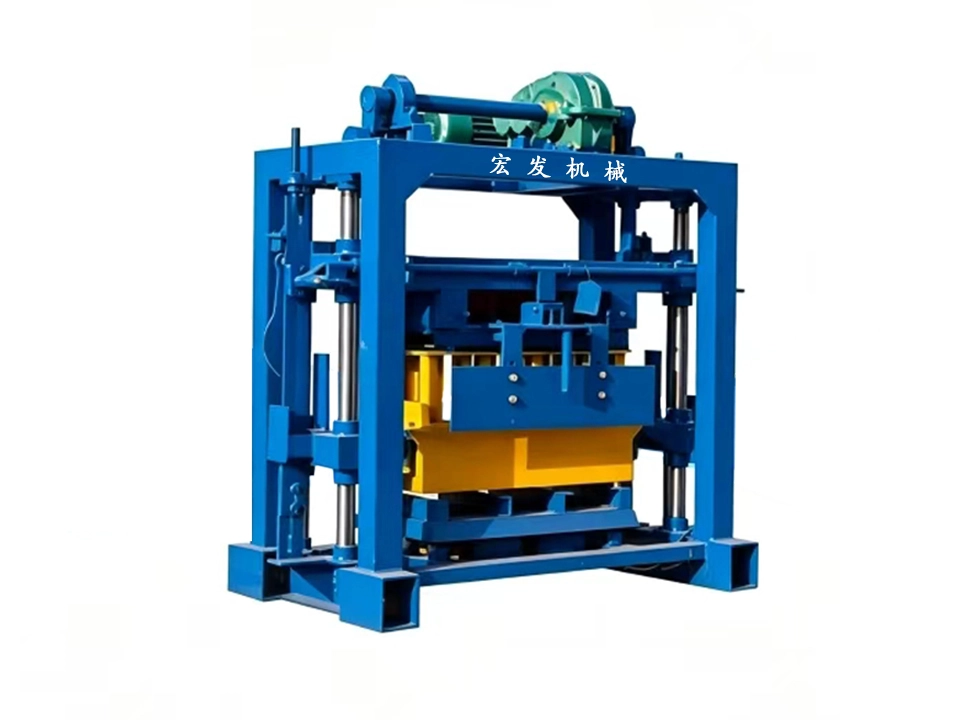
The machine adopts heavy‑duty gantry‑type welded steel frame with four vertical guide shafts plus wear‑resistant sliding sleeves. It absorbs continuous vibration force in mass production and minimizes frame loosening, twisting and guide offset. Many small‑size block machines suffer mold offset and uneven block height after long‑time vibrating operation. QTJ4‑40B2 maintains stable positioning accuracy, so block dimension consistency stays reliable over long‑run production. For overseas small manufacturers, it means less downtime for frame calibration and fewer spare‑part replacements. Equipment depreciation cost per hollow block is reduced and overall profit margin gets improved.
3. Low‑Entry Investment, Pallet‑Supported Production, Quick Startup on Limited Workshop Space
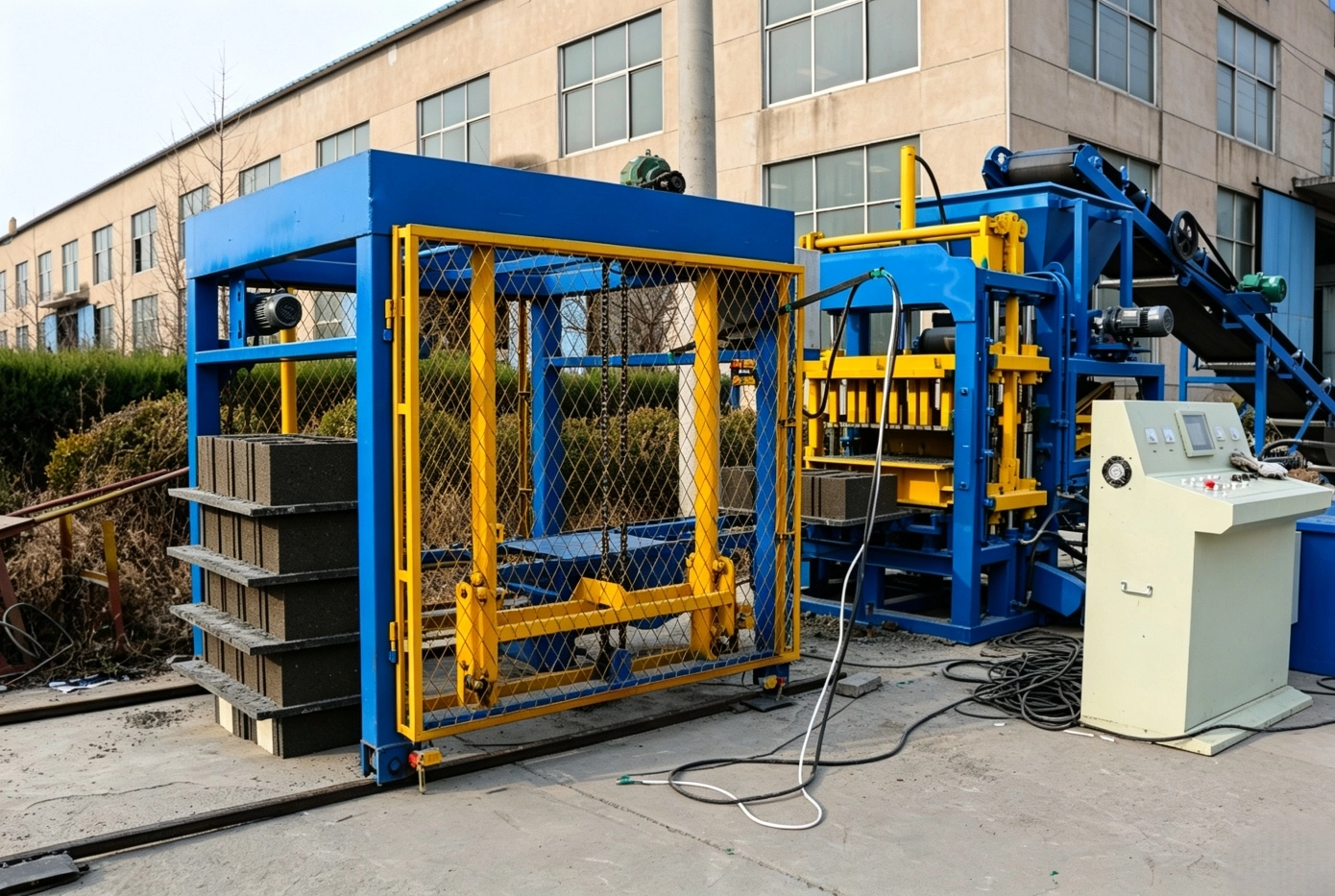
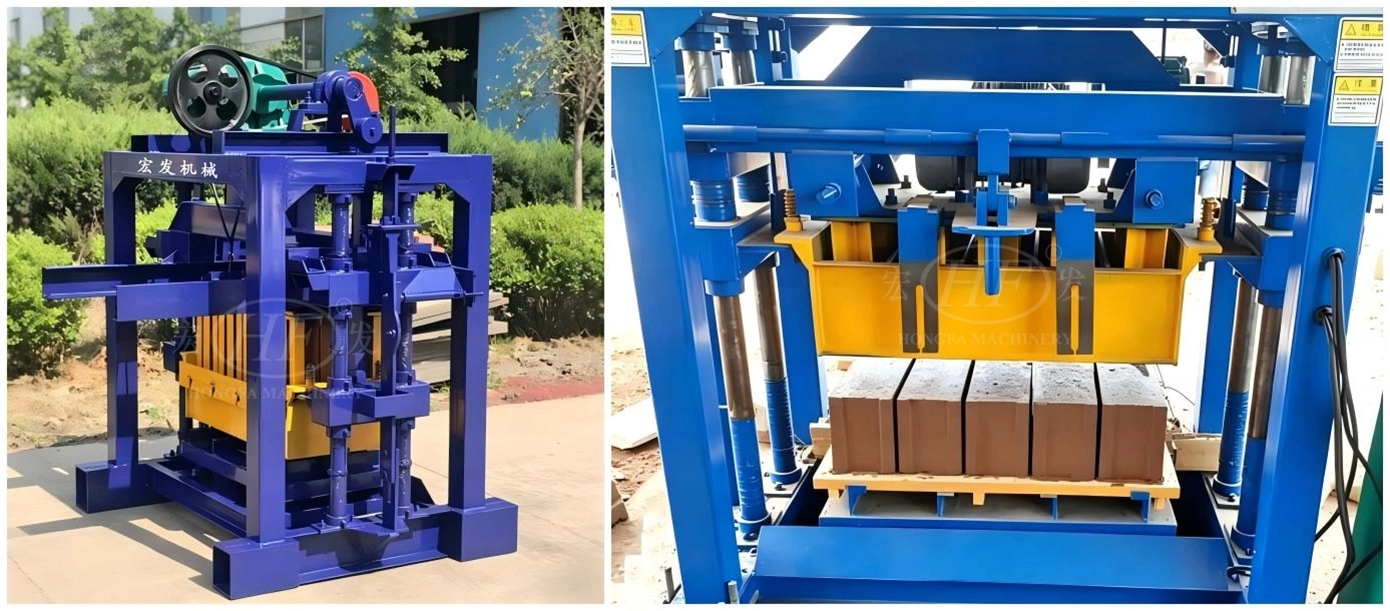
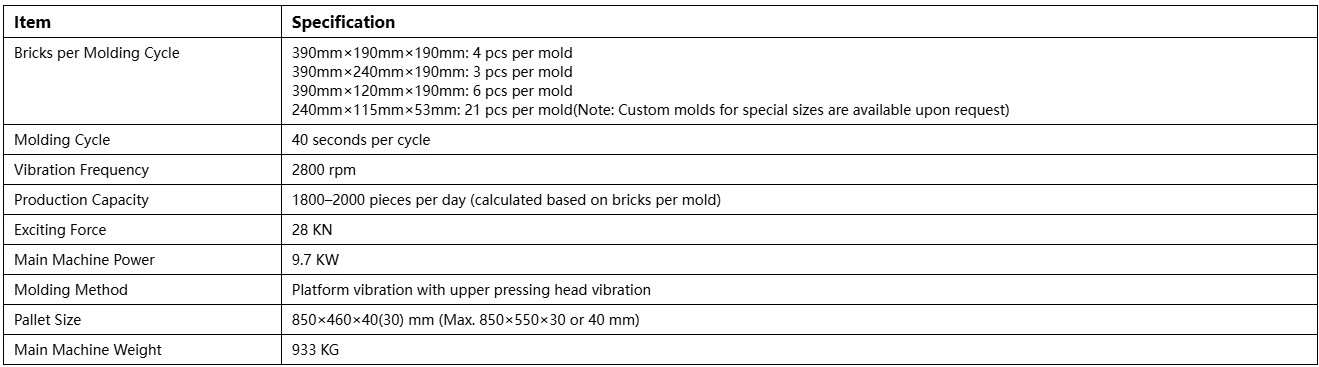
QTJ4‑40B2 is a stationary table‑vibration block machine with host weight of only 933KG. It does not require heavy‑duty foundation or huge factory building. A normal hardened floor is sufficient for installation. Together with a concrete mixer, you can set‑up a simple hollow‑block production line. Pallet‑carrying production mode brings low capital threshold, perfect for new‑start brick enterprises, small contractors and rural brick workshops. You do not need huge budget for large‑scale fully‑automatic lines. Compact footprint makes deployment easy in space‑limited overseas sites. Operators can master workflow after short‑term training without high‑salary senior technicians. It cuts down your early‑stage factory and labor cost and speeds‑up payback period.
4. Stable Multi‑Block Output, Well‑Matched for Small‑to‑Medium Hollow Block Supply Orders
Molding cycle takes around 40 seconds per mold. It can produce 4 pcs of standard 390×190×190 hollow blocks in one stroke, reaching 1800‑2000 qualified blocks within an 8‑hour shift. Mechanic‑electric hybrid control delivers steady repeating cycles and avoids frequent jamming. The machine supports long continuous running for concentrated construction orders, ensuring on‑time supply. No overcapacity‑caused idle equipment, nor output shortage delaying project delivery. Cooperate with simple feeding mixer, you can adjust working hours according to order volume and flexibly handle hollow‑block contracts of different sizes.
5. Wide Raw‑Material Compatibility, Local Sourcing to Control Material Expense
This machine works well with locally available sand, stone powder, fly ash, slag, crushed brick waste and gravel after simple processing. No expensive special aggregates are mandatory. Overseas users can source raw materials on‑site and save high cost for long‑distance transportation or cross‑border procurement. Even with minor quality fluctuation of local materials, qualified hollow blocks can still be made with proper mixing proportion. It helps you hedge against raw‑material price hikes and secure profit for every batch, especially suitable for regions with diverse local resource conditions.
6. Convenient Mold Replacement, One Machine for Multiple Block Types to Expand Order Sources
Quick‑disassembly mold structure allows you to switch between hollow blocks, standard bricks and partition blocks by swapping manganese‑steel molds. Multi‑position holes on positioning stand shafts enable simple mechanical adjustment for different mold heights without heavy host modification. You do not have to purchase multiple forming machines. Just changing molds enables you to satisfy various dimension requirements for building blocks. Higher equipment utilization supports both bulk standard hollow‑block contracts and small customized orders, enriching your product portfolio and strengthening market competitiveness.
1. Combined Upper‑Lower Vibration System, Complete Hollow Cavities & Low Defect Loss
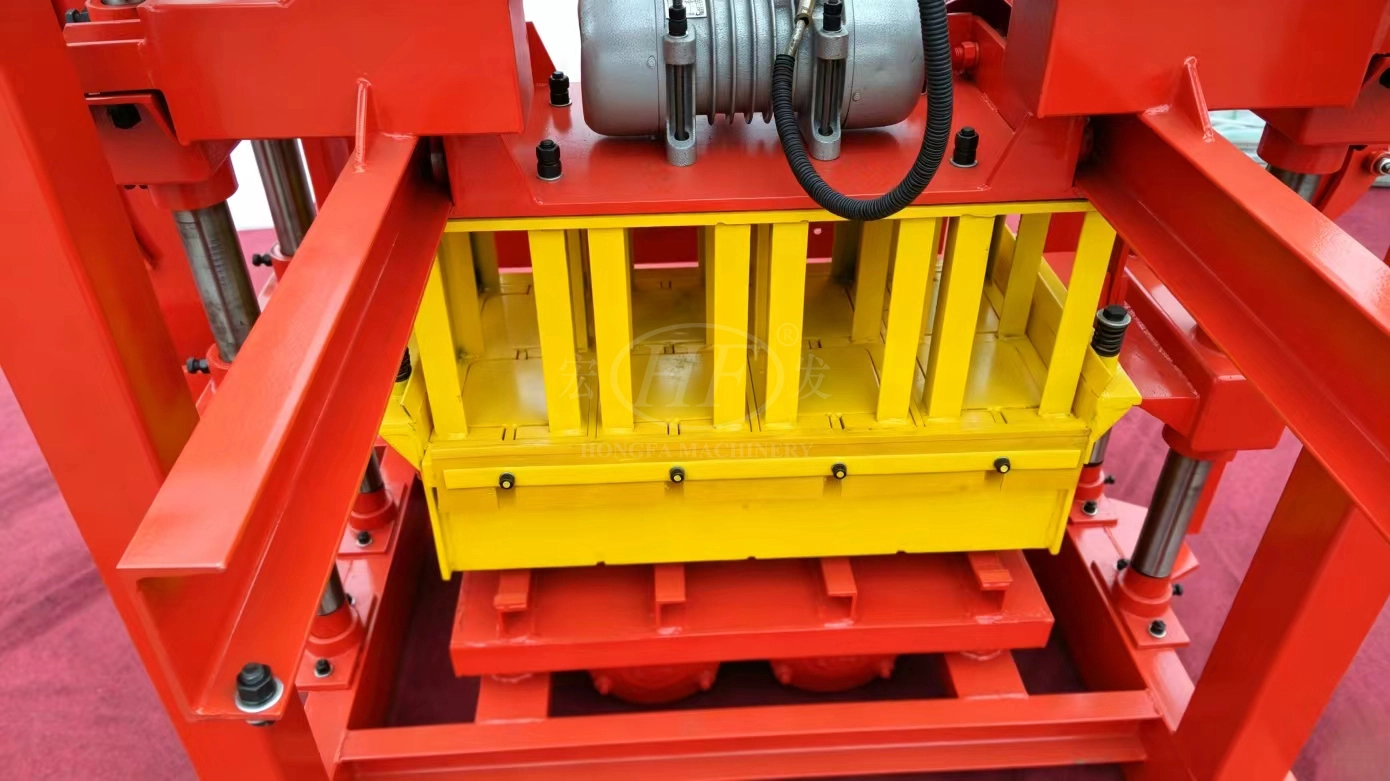
QTJ4‑40B2 is equipped with dual 3KW lower vibrators plus one 1.5KW upper vibrator working synchronously, specially optimized for hollow block production. During feeding, table vibration pushes concrete fully into every corner around core pins. In forming phase, upper and lower vibrators work together to compact raw materials. Finished hollow blocks feature complete cavity profile, uniform wall thickness and neat edges, effectively avoiding common defects such as cavity collapse, corner breakage and inner looseness. Block strength meets overseas acceptance standards for residential partition walls and boundary walls. Low defective rate reduces material waste and re‑work cost, protecting you from order rejection or compensation risk and supporting reliable delivery of hollow block projects.
2. Reinforced Gantry Steel Frame & Four‑Shaft Guidance, Anti‑Deformation for Longer Service Life
The machine adopts heavy‑duty gantry‑type welded steel frame with four vertical guide shafts plus wear‑resistant sliding sleeves. It absorbs continuous vibration force in mass production and minimizes frame loosening, twisting and guide offset. Many small‑size block machines suffer mold offset and uneven block height after long‑time vibrating operation. QTJ4‑40B2 maintains stable positioning accuracy, so block dimension consistency stays reliable over long‑run production. For overseas small manufacturers, it means less downtime for frame calibration and fewer spare‑part replacements. Equipment depreciation cost per hollow block is reduced and overall profit margin gets improved.
3. Low‑Entry Investment, Pallet‑Supported Production, Quick Startup on Limited Workshop Space
QTJ4‑40B2 is a stationary table‑vibration block machine with host weight of only 933KG. It does not require heavy‑duty foundation or huge factory building. A normal hardened floor is sufficient for installation. Together with a concrete mixer, you can set‑up a simple hollow‑block production line. Pallet‑carrying production mode brings low capital threshold, perfect for new‑start brick enterprises, small contractors and rural brick workshops. You do not need huge budget for large‑scale fully‑automatic lines. Compact footprint makes deployment easy in space‑limited overseas sites. Operators can master workflow after short‑term training without high‑salary senior technicians. It cuts down your early‑stage factory and labor cost and speeds‑up payback period.
4. Stable Multi‑Block Output, Well‑Matched for Small‑to‑Medium Hollow Block Supply Orders
Molding cycle takes around 40 seconds per mold. It can produce 4 pcs of standard 390×190×190 hollow blocks in one stroke, reaching 1800‑2000 qualified blocks within an 8‑hour shift. Mechanic‑electric hybrid control delivers steady repeating cycles and avoids frequent jamming. The machine supports long continuous running for concentrated construction orders, ensuring on‑time supply. No overcapacity‑caused idle equipment, nor output shortage delaying project delivery. Cooperate with simple feeding mixer, you can adjust working hours according to order volume and flexibly handle hollow‑block contracts of different sizes.
5. Wide Raw‑Material Compatibility, Local Sourcing to Control Material Expense
This machine works well with locally available sand, stone powder, fly ash, slag, crushed brick waste and gravel after simple processing. No expensive special aggregates are mandatory. Overseas users can source raw materials on‑site and save high cost for long‑distance transportation or cross‑border procurement. Even with minor quality fluctuation of local materials, qualified hollow blocks can still be made with proper mixing proportion. It helps you hedge against raw‑material price hikes and secure profit for every batch, especially suitable for regions with diverse local resource conditions.
6. Convenient Mold Replacement, One Machine for Multiple Block Types to Expand Order Sources
Quick‑disassembly mold structure allows you to switch between hollow blocks, standard bricks and partition blocks by swapping manganese‑steel molds. Multi‑position holes on positioning stand shafts enable simple mechanical adjustment for different mold heights without heavy host modification. You do not have to purchase multiple forming machines. Just changing molds enables you to satisfy various dimension requirements for building blocks. Higher equipment utilization supports both bulk standard hollow‑block contracts and small customized orders, enriching your product portfolio and strengthening market competitiveness.

 QT4‑25C Automatic Brick Making Machine | High‑output Forming Equipment For Concrete Hollow Blocks
QT4‑25C automatic brick making main machine is optimized for mass‑production of standard 390×190×190 mm hollow blocks. I...
 QTJ4-40B2 Semi-automatic Block Machine For Small Business
QTJ4-40B2 semi-automatic block machine is a fixed table-vibration concrete block making machine. It can run independentl...
QTJ4‑40B2 Concrete Block Making Machine | High‑quality Pavement Brick Production Machine
QTJ4‑40B2 concrete block making machine is specially designed for mass‑production of pavement bricks and paving blocks. ...
Shandong Hongfa Scientific Industrial&Trading Co.,Ltd ©️2026Copyright © LU ICP B 16041216-4